A large B2B enterprise with an extensive digital product catalog had a conventional website chatbot that handled basic FAQ routing and contact form submissions. The tool had limited awareness of what the visitor was actually doing on the site and no ability to assess the commercial significance of a conversation. Sales teams received leads with minimal context, a name, an email, and whatever the visitor chose to type into a form. There was no way to distinguish a casual browser from a high-intent buyer without manual qualification.
The organization wanted a conversational AI that could understand the visitor's context in real time and provide sales teams with actionable intelligence when a lead was handed off.
PiSrc deployed Prism, its AI conversation platform, with a set of agentic tools that feed contextual information into the conversation engine. Each tool operates autonomously, gathering data that the AI uses to shape its responses and assess visitor intent.
User identity integration. For authenticated visitors, Prism retrieves profile attributes such as role, title, and industry from the site's identity layer. This allows the conversation to adapt its vocabulary, depth, and product focus without the visitor needing to re-state who they are. A technical evaluator researching a specific product line receives different treatment than a procurement manager comparing suppliers.
Rolling browsing summary. Prism maintains a rolling summary of the visitor's recent page views. This composite picture of browsing behavior allows the AI to identify emerging patterns of interest. A visitor who has spent time on product specification pages, then moved to integration guides, then to compatibility tables is signaling a specific evaluation trajectory that the AI incorporates into its responses.
Current page awareness. When a visitor initiates a conversation, Prism reads the content of the page they are currently viewing. This means that references like "this product," "the specifications on this page," or "how does this compare" are resolved against the actual page content rather than requiring the visitor to repeat information. The AI responds in the context the visitor is already in, which substantially reduces friction and improves the quality of the interaction.
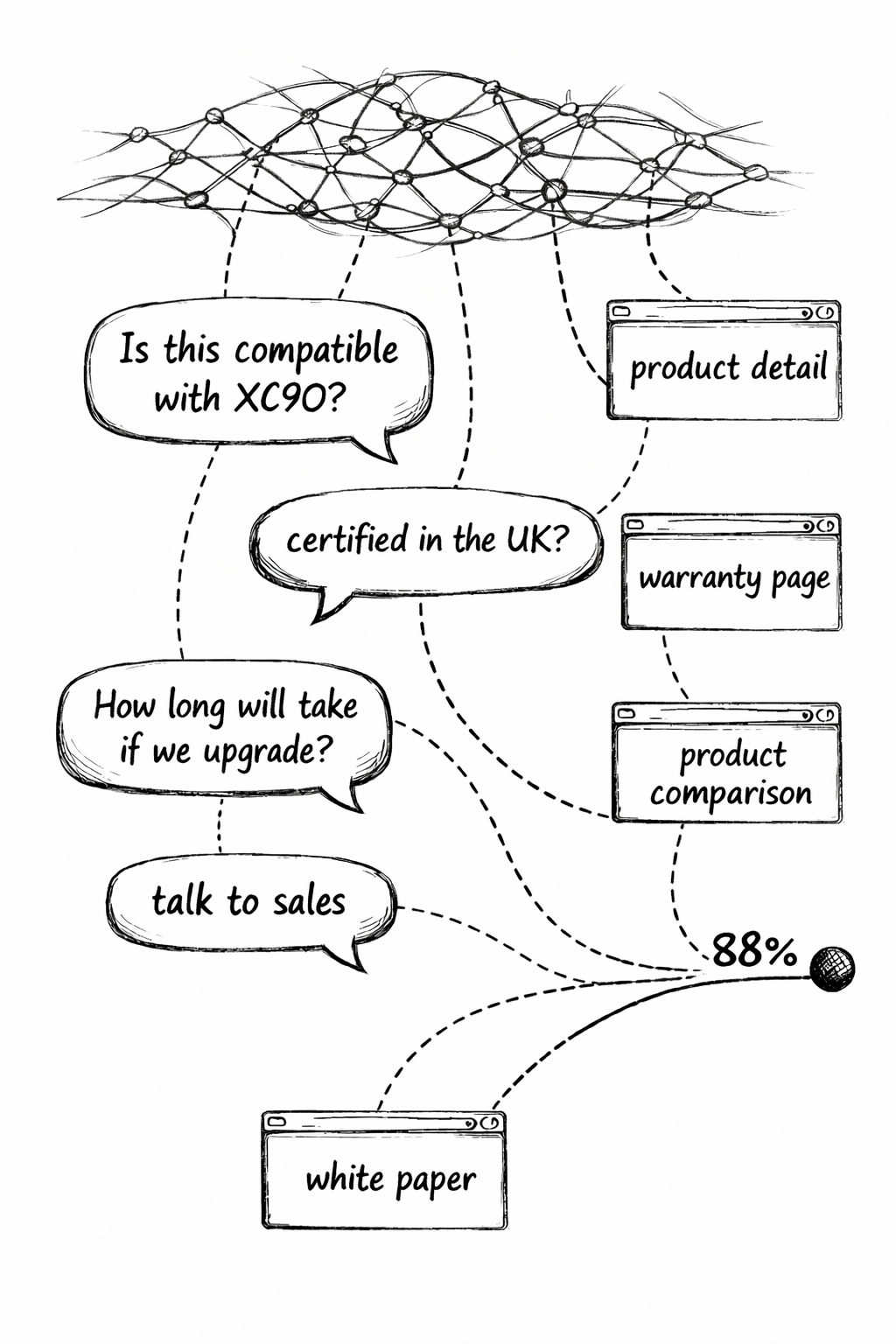
The most distinctive capability in this deployment was the integration of a Bayesian network analysis that connects browsing behavior to historical conversion outcomes.
Traditional lead scoring assigns points based on predefined rules: visiting a pricing page might add 10 points, downloading a datasheet might add 15. These scores are useful but arbitrary. They reflect a marketer's assumptions about which actions matter, not empirical evidence of what actually predicts a sale.
PiSrc's approach replaces this with a probabilistic model trained on historical data. The model examines page view sequences, form submissions, chat interactions, and downstream sales outcomes for past visitors. It then computes a conditional probability of customer acquisition for the current visitor based on how closely their behavior matches patterns that historically led to closed deals.
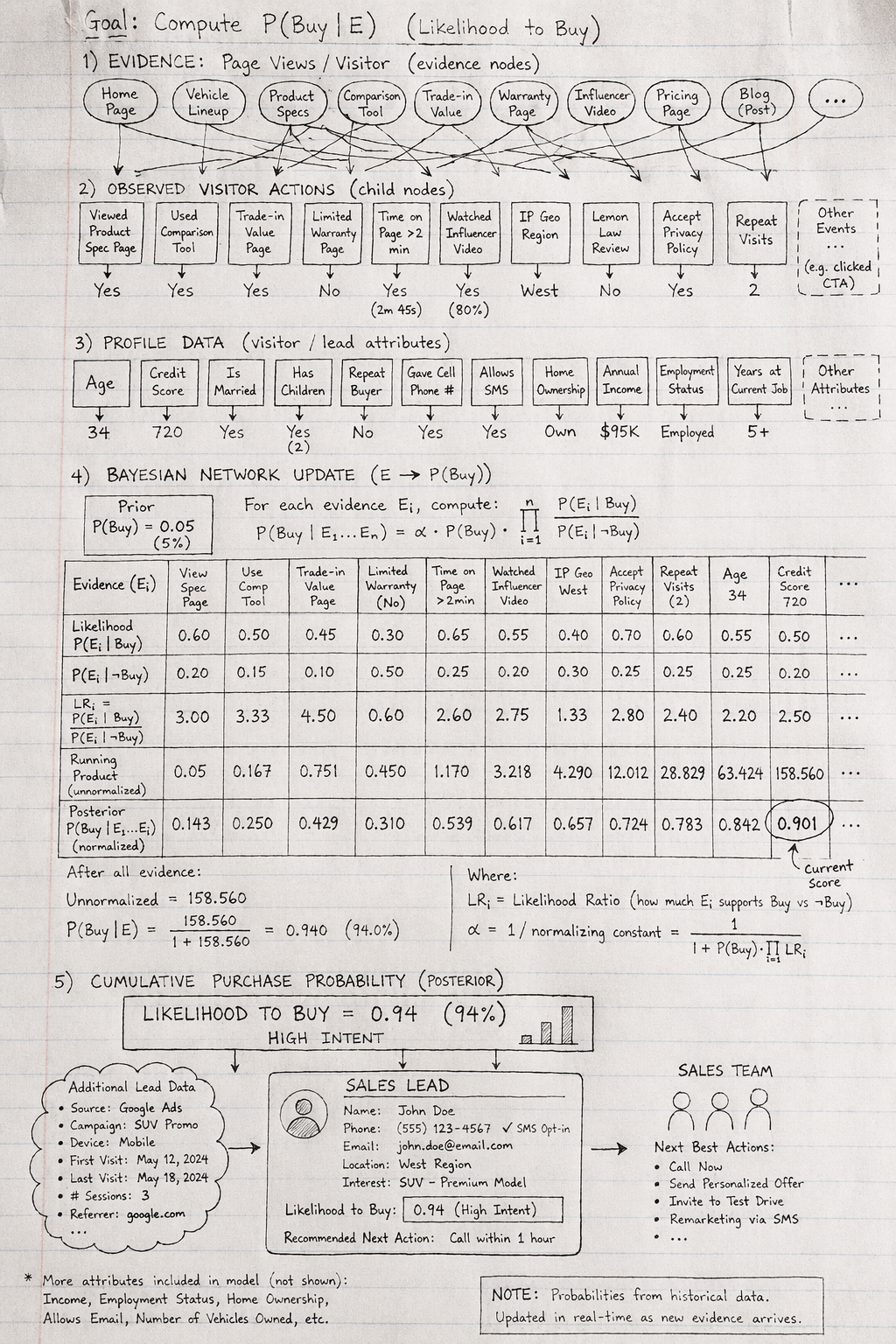
This analysis surfaced non-obvious correlations. Visitors who viewed regulatory compliance and certification documentation, for example, showed a disproportionately strong correlation with eventual sales qualification. This was not a pattern that the marketing team had identified or would have weighted heavily in a traditional scoring model, but the data was clear. The Bayesian approach surfaces these signals precisely because it does not rely on human assumptions about what matters.
When a conversation reaches a handoff point, whether to live chat or a scheduled meeting, the sales representative receives a lead brief that includes the browsing summary, conversation history, and the computed customer probability. This is fundamentally different from receiving a lead score of "72 out of 100." It is a statement grounded in observed behavior and historical outcomes: visitors who have behaved this way became customers at a specific rate.
A complementary approach to inferring intent from behavioral signals is to ask visitors directly. PiSrc's Fütprint product enables dynamic questionnaires that guide visitors through branching question trees, producing explicit first-party data about who they are and what they are looking for. Where Bayesian analysis derives probability from observed behavior, Fütprint captures declared intent. The two approaches are not mutually exclusive: questionnaire responses can serve as additional input signals to the probability model, and the structured paths visitors take through a Fütprint questionnaire generate their own behavioral footprint that correlates with downstream outcomes. For organizations that prefer a more structured, author-controlled methodology over purely inferred scoring, Fütprint provides that foundation.
The deployment connected the marketing experience directly into the sales process in a way that traditional lead scoring could not. Sales teams reported that the lead briefs provided by Prism gave them a substantive starting point for conversations rather than a cold introduction.
The Bayesian probability model identified behavioral signals that had not been recognized through conventional analytics. These insights informed not only sales prioritization but also content strategy, because understanding which content correlates with conversion helps the marketing team invest in the right material.
The page-aware and browsing-aware conversation capabilities reduced repetitive exchanges where visitors had to re-explain their context. Conversations were more efficient and more relevant, which improved both visitor satisfaction and the quality of information captured for sales follow-up.
